
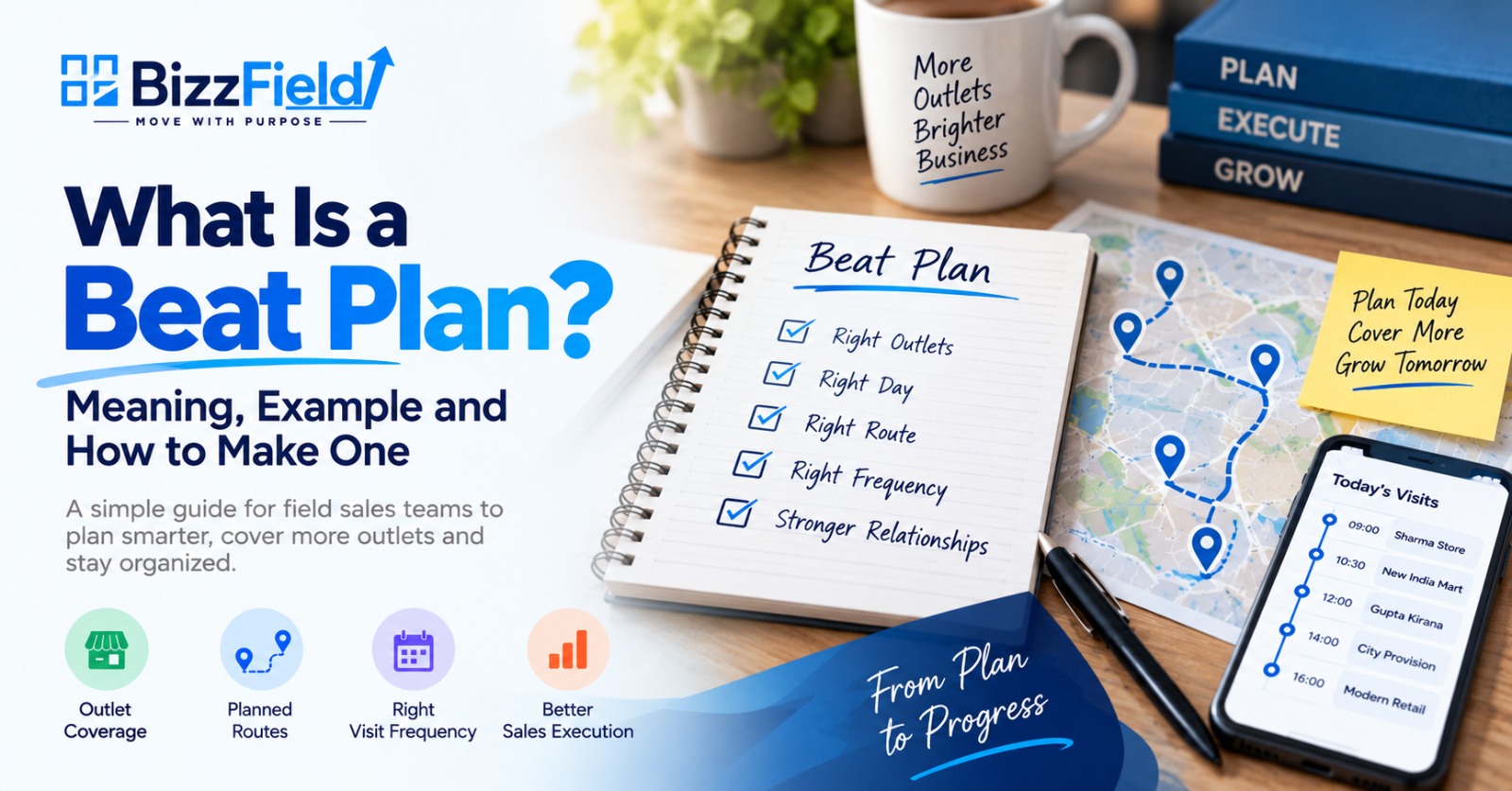
Quick summary: What is a beat plan?
What is a beat plan? A beat plan is a fixed, recurring schedule that tells a field sales representative which outlets to visit, on which day and in what order, so every outlet in the territory gets regular, planned coverage. Without one, reps decide each morning where to go, and nobody can say why a store ran out of stock.
A beat plan replaces that guesswork with a routine. This guide covers the basics of FMCG beat planning: its meaning, key terms, common types and a simple example.
What is a beat plan?
In practice, a beat plan divides a territory into beats, each a group of outlets a rep can cover in a day, and assigns each beat to a working day. The cycle then repeats, usually weekly, so each outlet is visited on a predictable day.
Beat plan meaning in sales
A beat plan in sales is about coverage more than routes, which makes it a core part of field sales planning. FMCG products reach the market through many small outlets, so which outlets get visited, and how often, affects orders, stock availability and shelf presence.
A beat plan supports this in three ways. Every outlet gets a scheduled slot, so coverage is consistent. Reps start the day with a list instead of a decision. And managers can plan around it, judging whether a beat is too big for one day, which outlets deserve more visits and where a territory may need another rep.
It does not raise sales by itself. It makes coverage dependable, and what happens inside the outlet still decides the result.
Key terms in beat planning
- Beat: a group of outlets covered together, usually in one day
- Outlet: a single retail or customer location in the plan, such as a kirana store, wholesaler, chemist or dhaba
- Territory: the larger area assigned to a rep or team, usually containing several beats
- Visit frequency: how often an outlet is visited, such as weekly or fortnightly
- Route sequence:the order in which outlets are visited within a beat, arranged so the rep doesn't double back
- Priority outlet: an outlet that matters more to the business, usually because of its high sales volume, so it is visited more often or earlier
- Visit compliance: the share of planned visits that were actually completed, used to check whether the plan is being followed
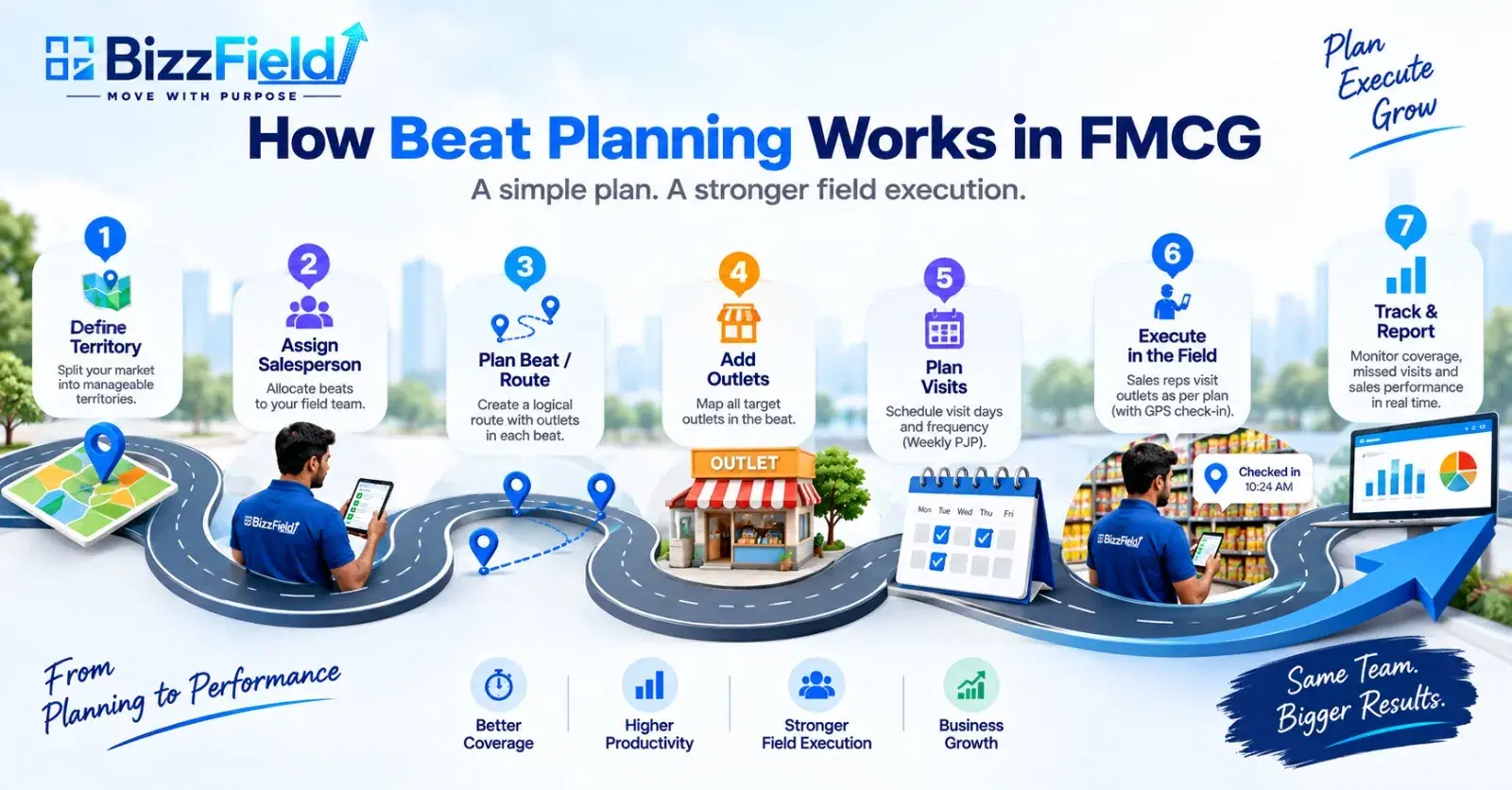
Types of beat plans
Four types are common, though companies name them differently and many territories mix them.
- Daily beat plan. A few selected outlets are visited every day. It suits very high-volume or large-format outlets, such as a big wholesaler or supermarket.
- Weekly beat plan. Each beat is worked once a week on a fixed day. It is the usual structure for general trade, where most outlets need regular calls.
- Fortnightly beat plan.Outlets are visited every two weeks. It suits smaller or remote outlets whose order sizes don't justify a weekly visit.
- Priority-based beat plan.Visit frequency follows outlet value, so high-priority outlets are seen more often and others less. It helps when a rep can't cover every outlet equally.
A simple FMCG beat plan example
Neha is a sales officer at a snacks company in a mid-sized town, with about 110 active outlets. Her manager builds five beats for Monday to Friday and keeps Saturday free for follow-ups.
Her Tuesday beat is Station Road and Old Market: 24 kirana and general stores within a few lanes. She follows a set route sequence, starting at the far end of Station Road and working back toward the market entrance, so she never crosses the same lane twice. Two high-volume stores on this beat are marked priority outlets and are also visited on Friday.
Thursday's beat, Main Bazaar, has only 12 outlets because they are all wholesalers, and wholesale calls involve bigger orders and take longer. Small outlets beyond the bypass are visited fortnightly instead of weekly. The numbers are illustrative, but the pattern holds: beats are sized by workload, and visit frequency follows outlet value.
To build one yourself, start with our free FMCG beat plan template in Excel.
Beat plan vs tour plan
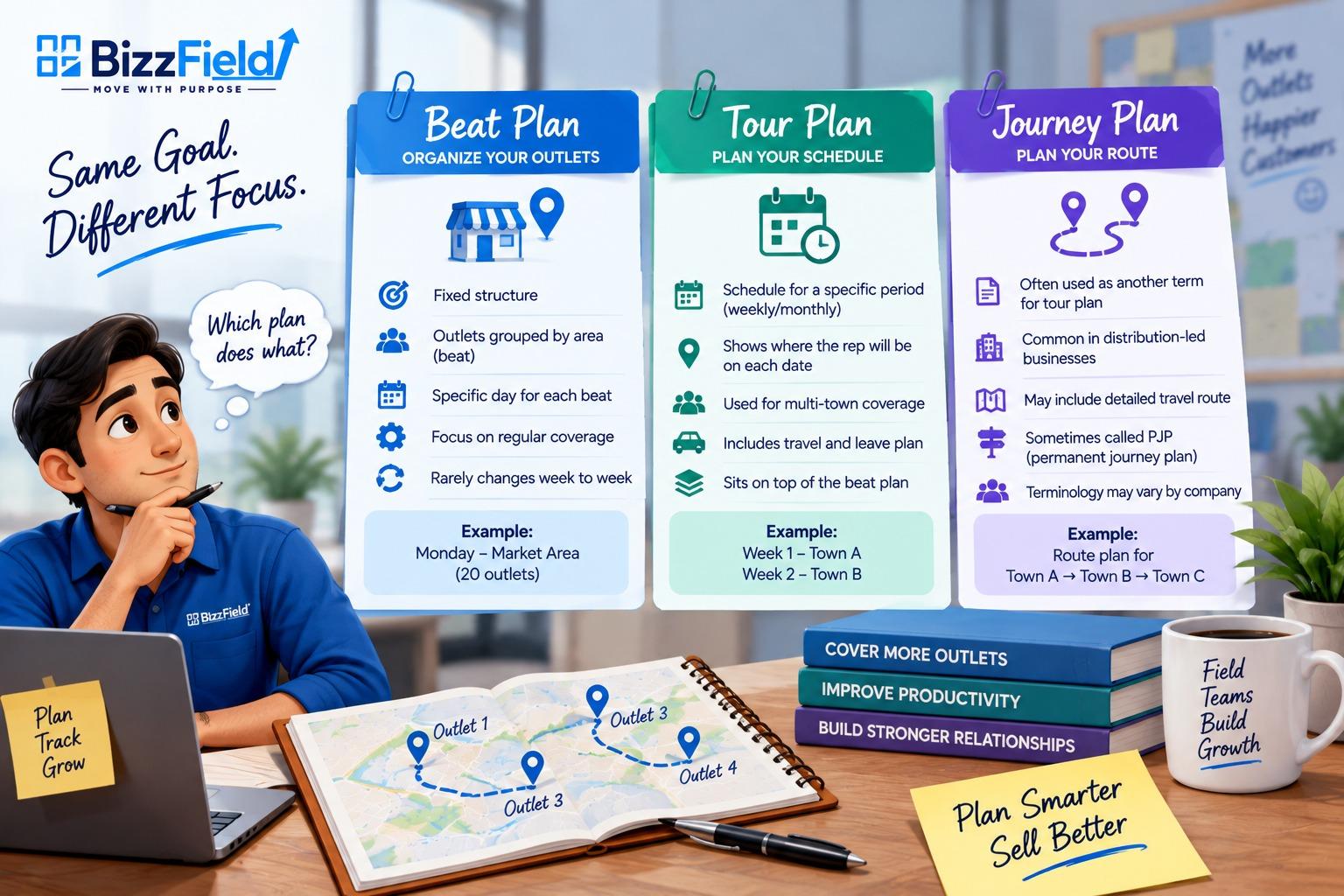
The two are often confused. A beat plan is a recurring outlet-visit routine, while a tour plan schedules where a field representative will be on specific dates or during a travel period.
| Parameter | Beat plan | Tour plan |
|---|---|---|
| Question it answers | Which outlets, in what order, on which day? | Where will the rep be on each date? |
| Time frame | A standing routine, repeated weekly or fortnightly | A set period, usually a month |
| How often it changes | Only when outlets or the territory change | Every period, to allow for leave, travel or new priorities |
| Typical use | Routine outlet coverage | Reps who travel across towns or work outside headquarters |
Think of the tour plan as the calendar and the beat plan as the routine that fills it. Some companies call the recurring structure a PJP (permanent journey plan), so check how your own team uses the terms.
Common beat plan mistakes
- Counting visits, not results: a plan can show full coverage while calls end without an order or a stock check.
- Ignoring outlet timings: shops with a weekly closing day or a busy morning rush get visited when nobody can place an order.
- No cover for absences: when a rep is on leave, the whole beat goes unvisited unless someone is assigned to it.
- Copying another company's beats: outlet mix, order size and travel time differ, so borrowed beat sizes and frequencies rarely fit.
When businesses need better beat-planning visibility
With one rep and one market, a plan on paper or in a spreadsheet is usually enough. As territories and teams grow, the harder question becomes whether the plan is being followed and which outlets were missed.
That is when teams look at beat and tour plan management software. BizzField SFA lets managers create beat plans and compare planned and actual visits, so sales territory planning and field execution sit in one place. If your current process still works, there is no need to change it yet.
Conclusion
A beat plan is a recurring schedule that decides which outlets a rep visits, when and in what order. Choose a visit frequency that fits your outlets, build beats around geography and outlet value, and check that the plan is followed and the visits are productive.
Frequently asked questions
A beat plan is a fixed schedule that tells a field sales representative which outlets to visit, on which day, and in what order. Each beat defines a specific cluster of outlets—like a market, locality, or stretch of road—that can be comfortably visited in a single working day.
A beat plan is the standing weekly structure defining which outlets belong to each beat and which day each beat is covered. A tour plan is a dated calendar schedule (often monthly or covering travel across multiple towns) sitting on top of the beat plan. A journey plan (or Permanent Journey Plan / PJP) is an alternative term commonly used interchangeably with a beat plan or route plan in distribution businesses.
A typical beat plan includes the territory split into beats, the day assigned to each beat, the sequenced outlet list, visit frequency (weekly, fortnightly, etc.), and the visit purpose (order booking, stock audit, payment collection, or merchandising).
Start with a verified outlet list with locations and sales potential, cluster outlets geographically to avoid crisscrossing lanes, assign visit frequencies based on store volume, balance daily workloads, sequence visits logically, and share the plan with field reps before reviewing and refining based on real-world execution.
Spreadsheets cannot verify whether visits were actually completed in the field, require tedious manual rebuilding when routes or reps change, and lack live tracking. SFA software provides reps their schedules on mobile and gives managers real-time GPS-verified visit tracking.
WRITTEN BY
Urvashi Srivastav
VP, Business Management & Client Relationships
VP at BizzField, working across business management and client relationships — building strong partnerships, streamlining operations and driving business growth.
Connect on LinkedIn